Charcoal
Studies
Still life, charcoal on paper
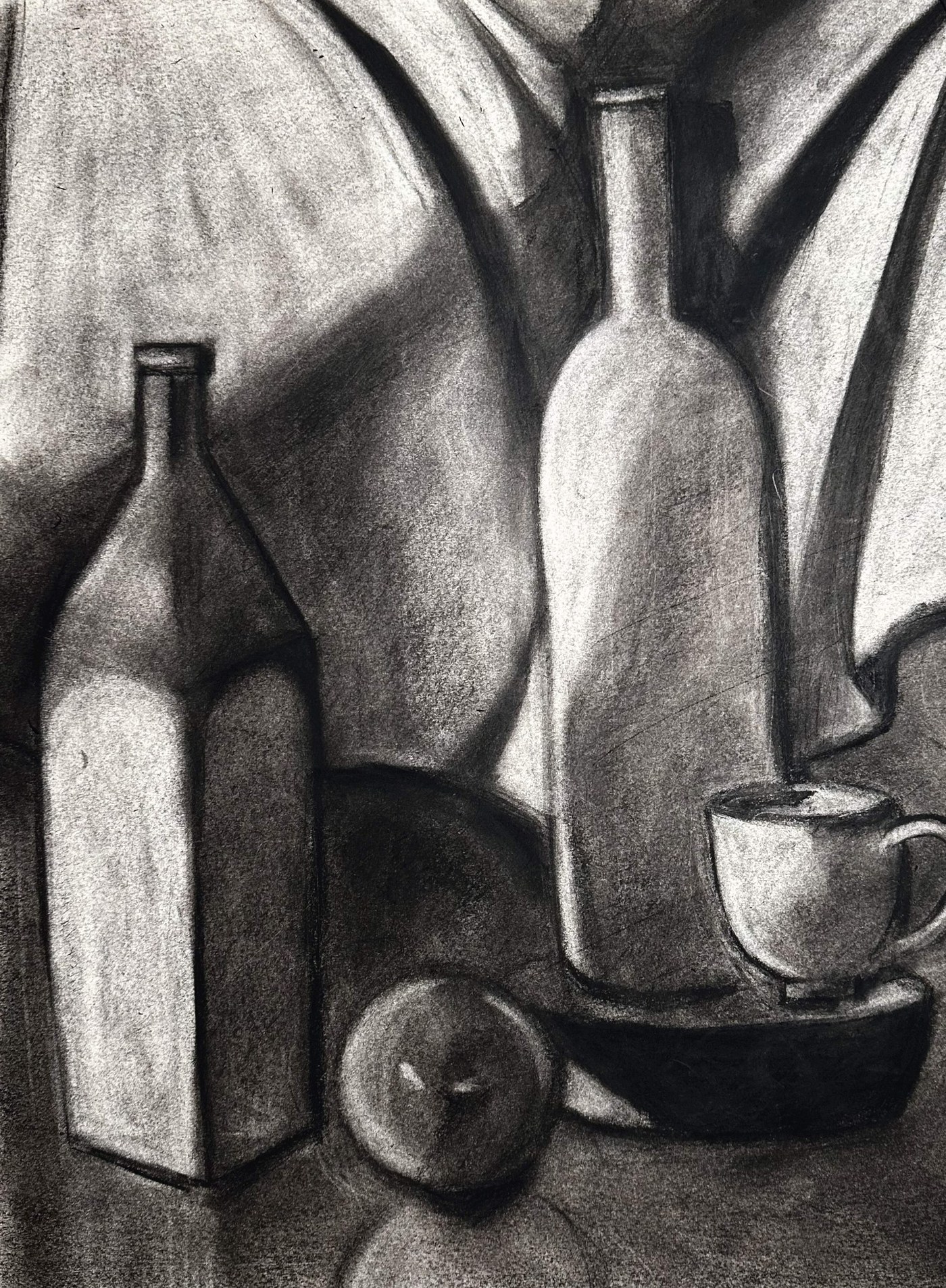
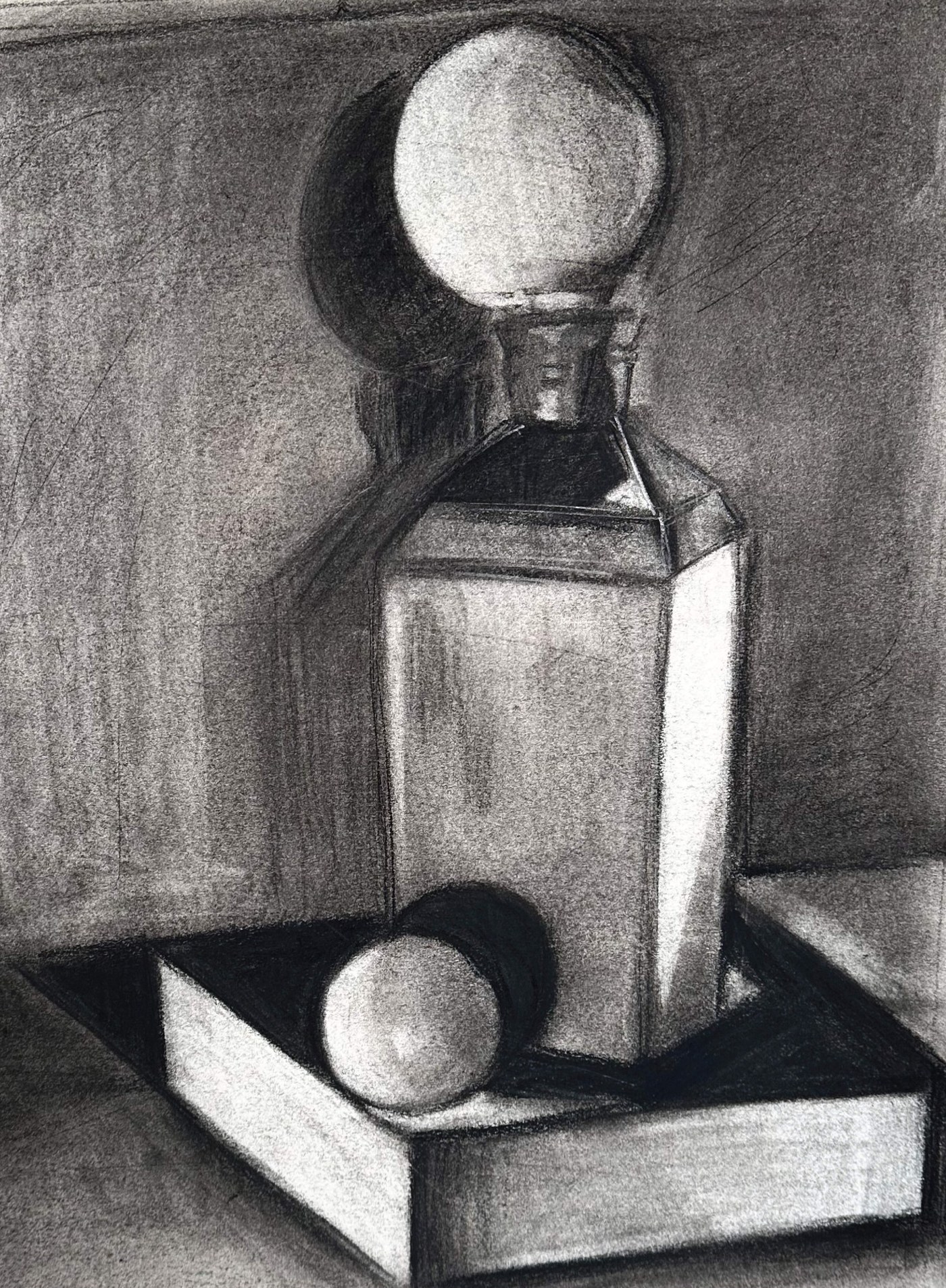
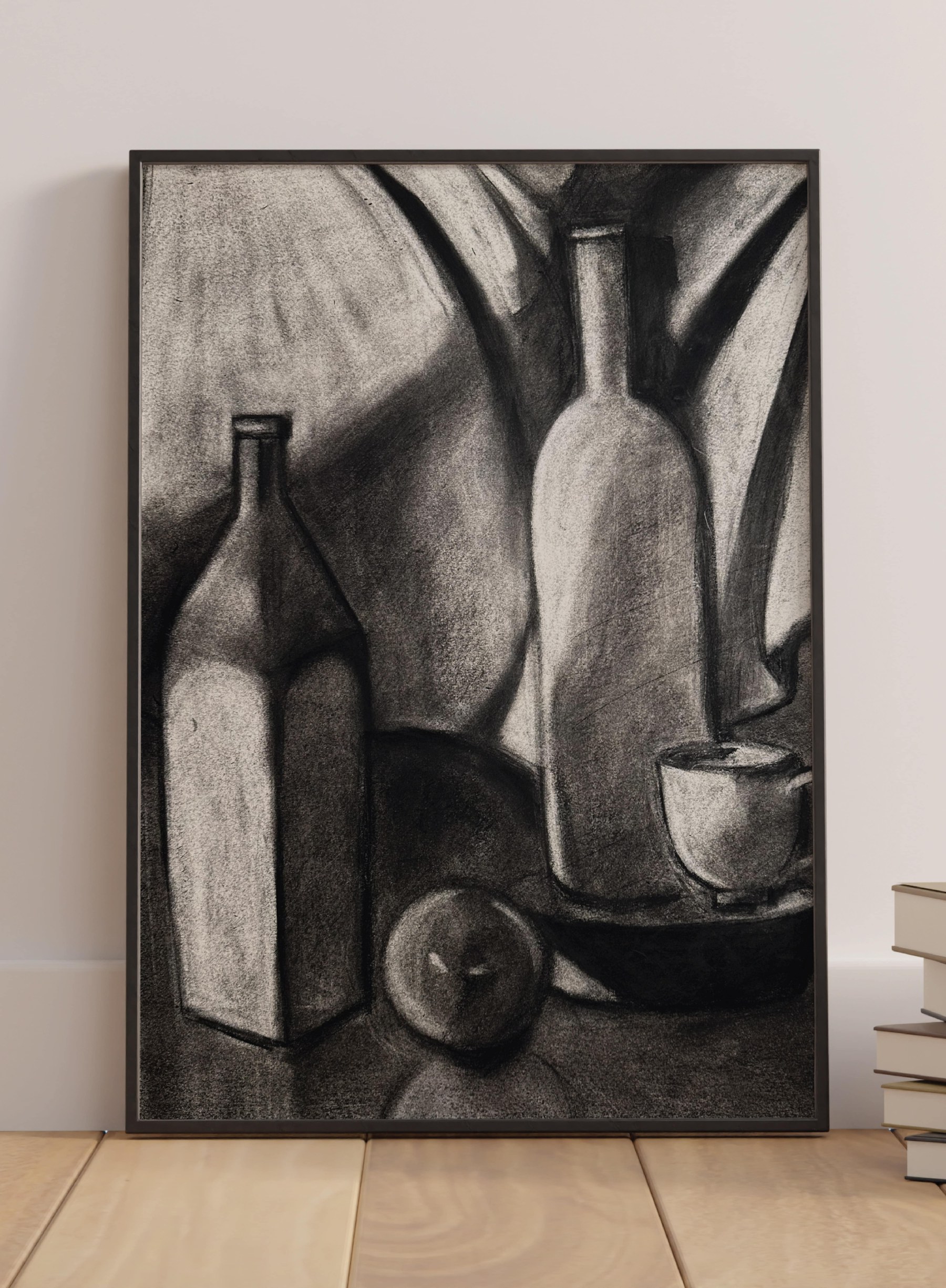
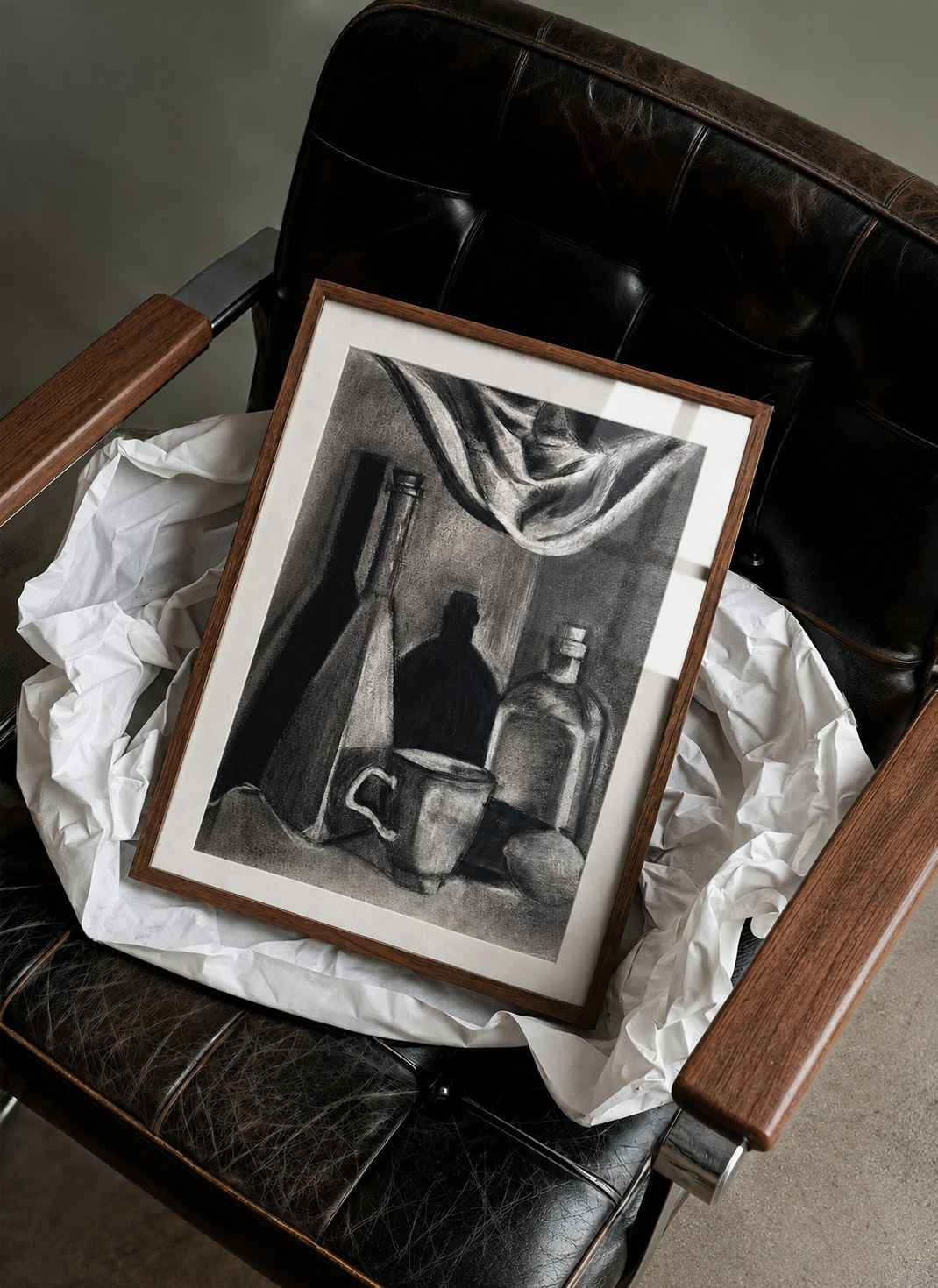
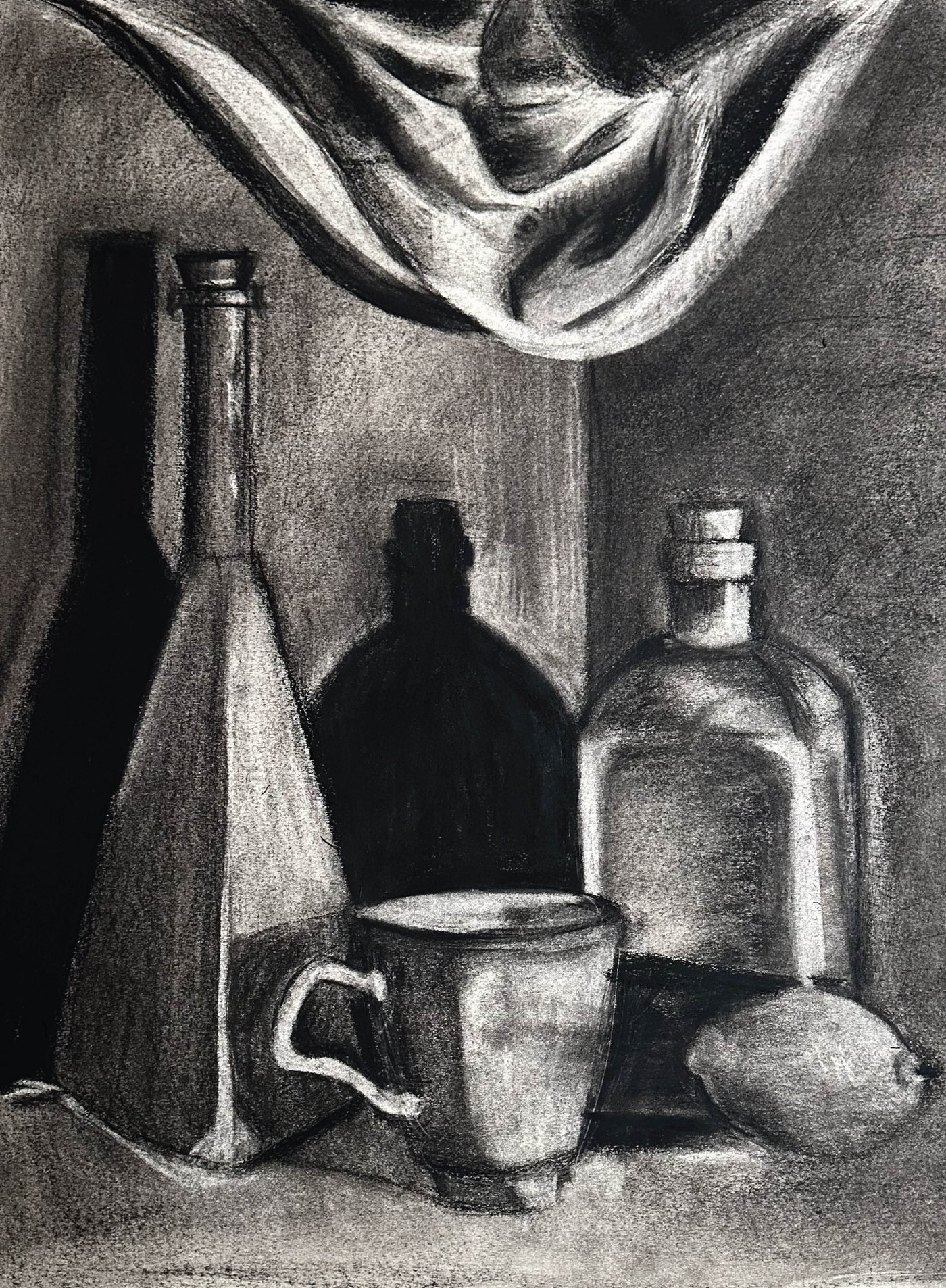
Three drawings from observation. Bottles, cloth and fruit lit hard from one side, worked from the darkest black the paper will hold back up to bare white.
Type
Coursework, observational drawing
Medium
Charcoal on paper
Year
2025
Artist
Katrina Dodds
Process
Drawing the light,
not the object.
Each setup is lit hard from one side, which is the whole reason for the exercise. A single strong source turns familiar objects into flat shapes of value, and once you are drawing the shapes rather than the bottle you already know is there, the proportions stop lying to you. The cast shadows are treated as objects in their own right. In the first study the biggest, blackest shape on the page is a shadow rather than anything on the table, and it is drawn with the same crisp edge as the glass in front of it, which is exactly the confusion the exercise is after.
The subjects were chosen for range rather than for looks. Glass, glazed ceramic, dry cloth and fruit skin all take the same light and return it completely differently, so a group that looks arbitrary is really a set of surface problems. Charcoal suits that: it goes to a genuinely dense black, lifts back to paper white with an eraser, and everything in between is a matter of pressure and blending rather than a different tool.
The drawings
Three setups,
one light.
Click a drawing to move to the next one, use the arrows, or swipe. Two crowded arrangements with drapery, then a stripped-back third that trades the cloth for flat planes.
STUDY 01 / 03
Value
No color,
so no hiding.
The only two things on the page are compressed charcoal and the paper it sits on. Every form, edge and shadow has to be built out of the distance between them.
Charcoal
- ROLE
- Darkest value
- USE
- Cast shadow, silhouette
- TOOL
- Compressed stick
Paper
- ROLE
- Lightest value
- USE
- Highlight, rim light
- TOOL
- Kneaded eraser
Framed
Off the board,
onto a wall.
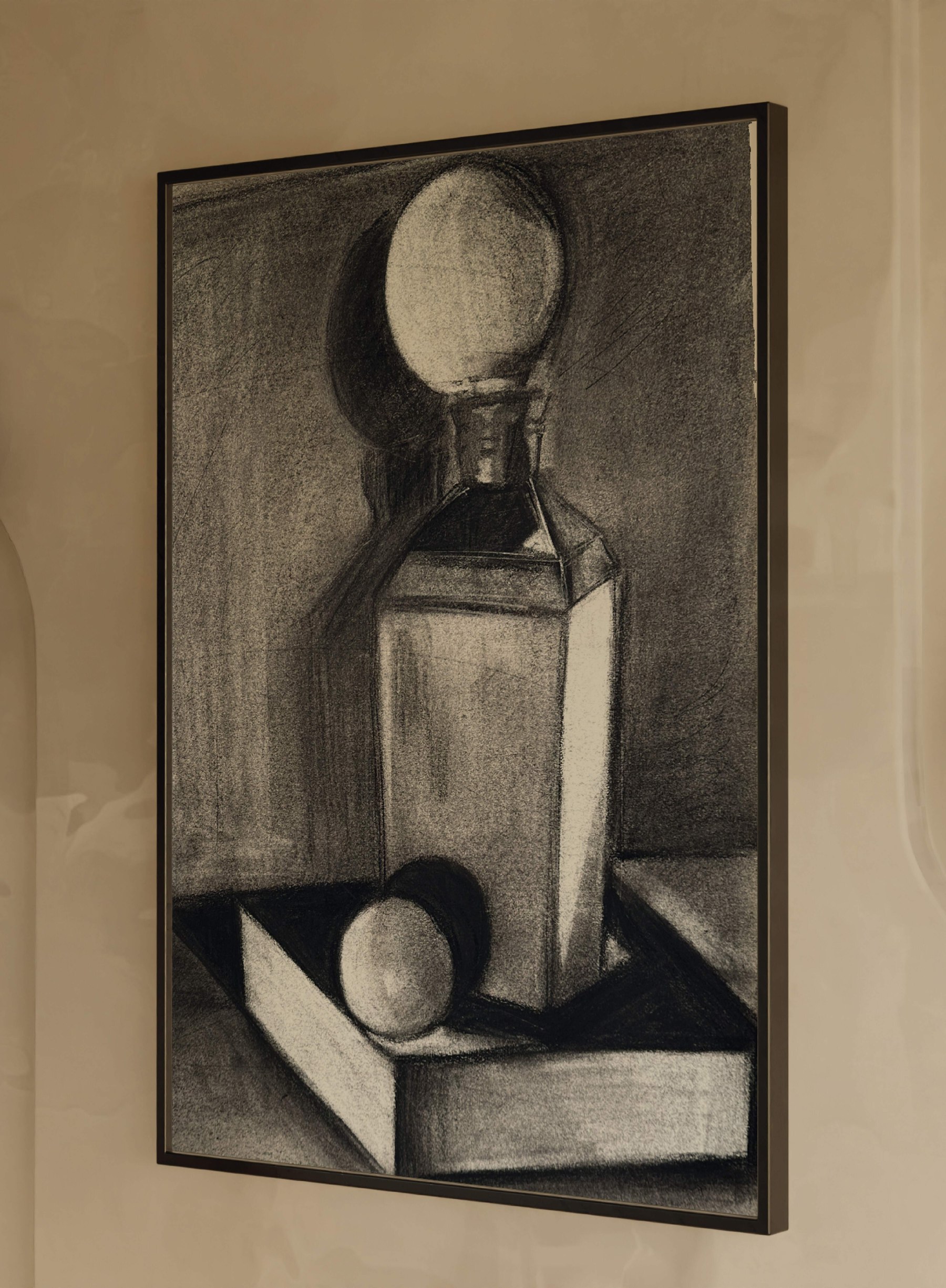
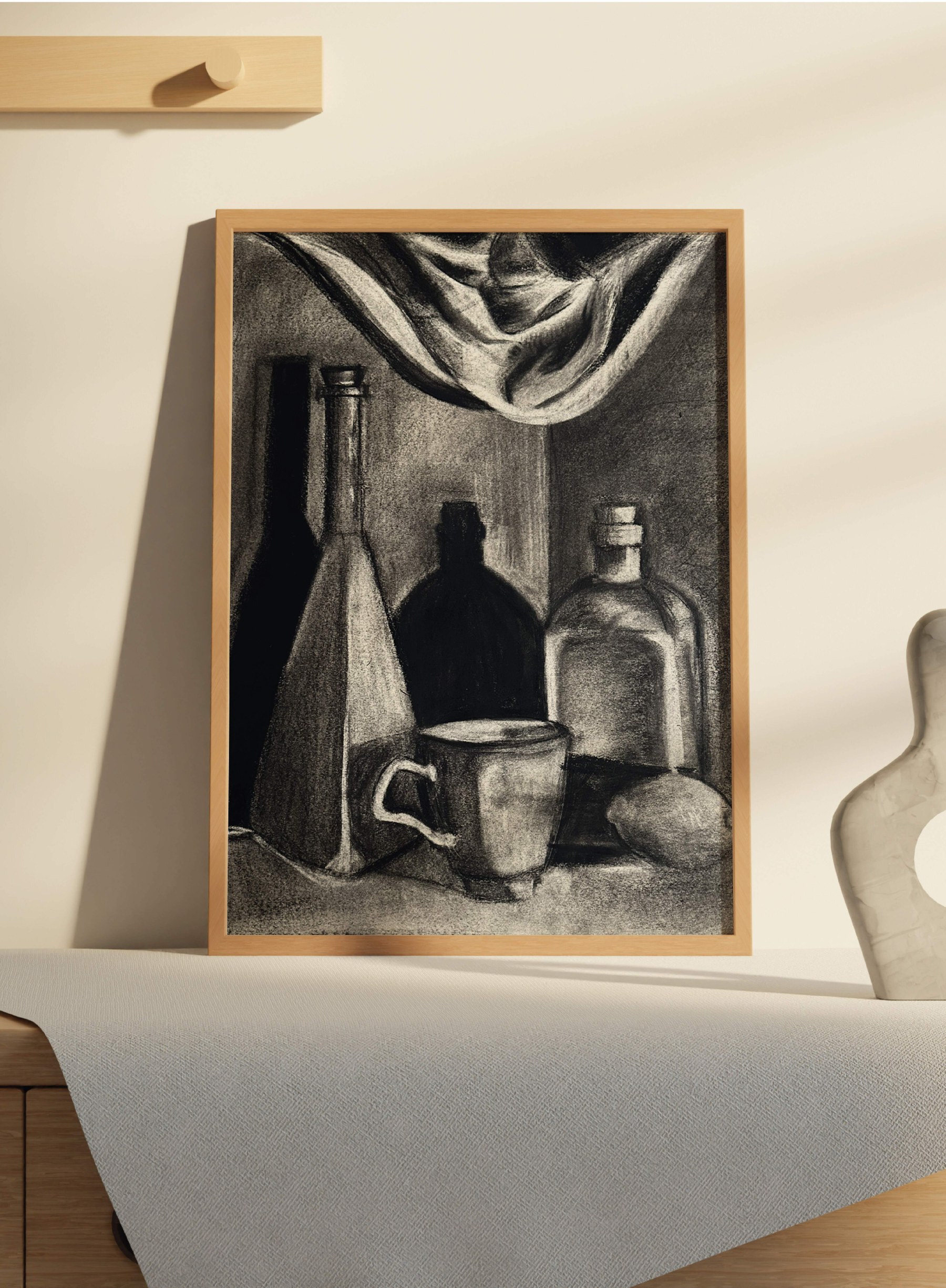
All three framed simply and shot in warm daylight. A thin black or oak edge and nothing else, because a mount with any personality of its own would start competing with the drawing.